Why Speed to Close Wins the Deals Your Competition Loses
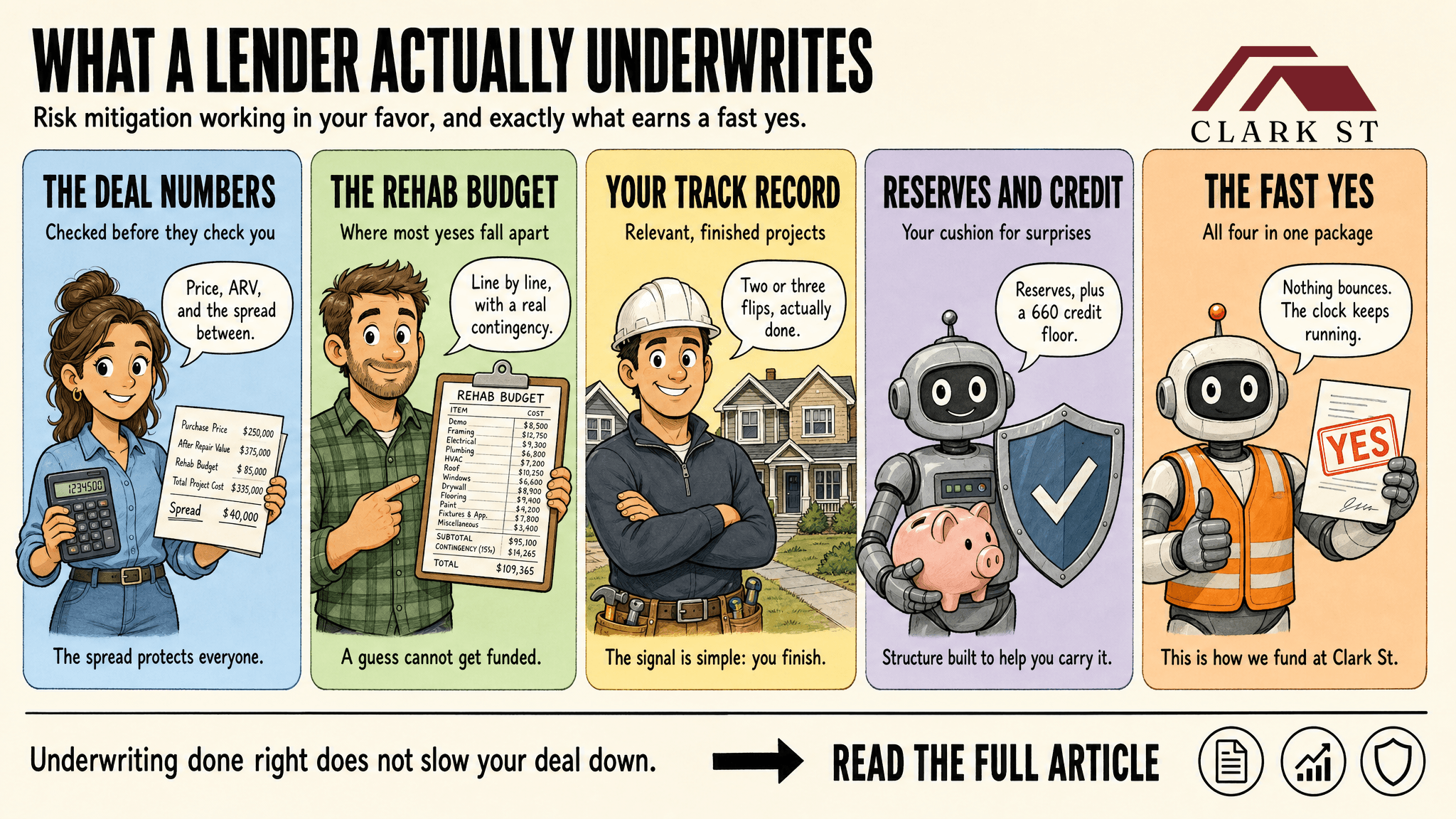
The best deals go to whoever can actually close, not whoever offers the most. Here is why a believable fast close is a deal-sourcing weapon.
From the underwriting desk
Investment thesis, market commentary, deal stories, and the occasional argument with conventional wisdom. Written for accredited LPs who want to understand the work, not just the numbers.

The best deals go to whoever can actually close, not whoever offers the most. Here is why a believable fast close is a deal-sourcing weapon.

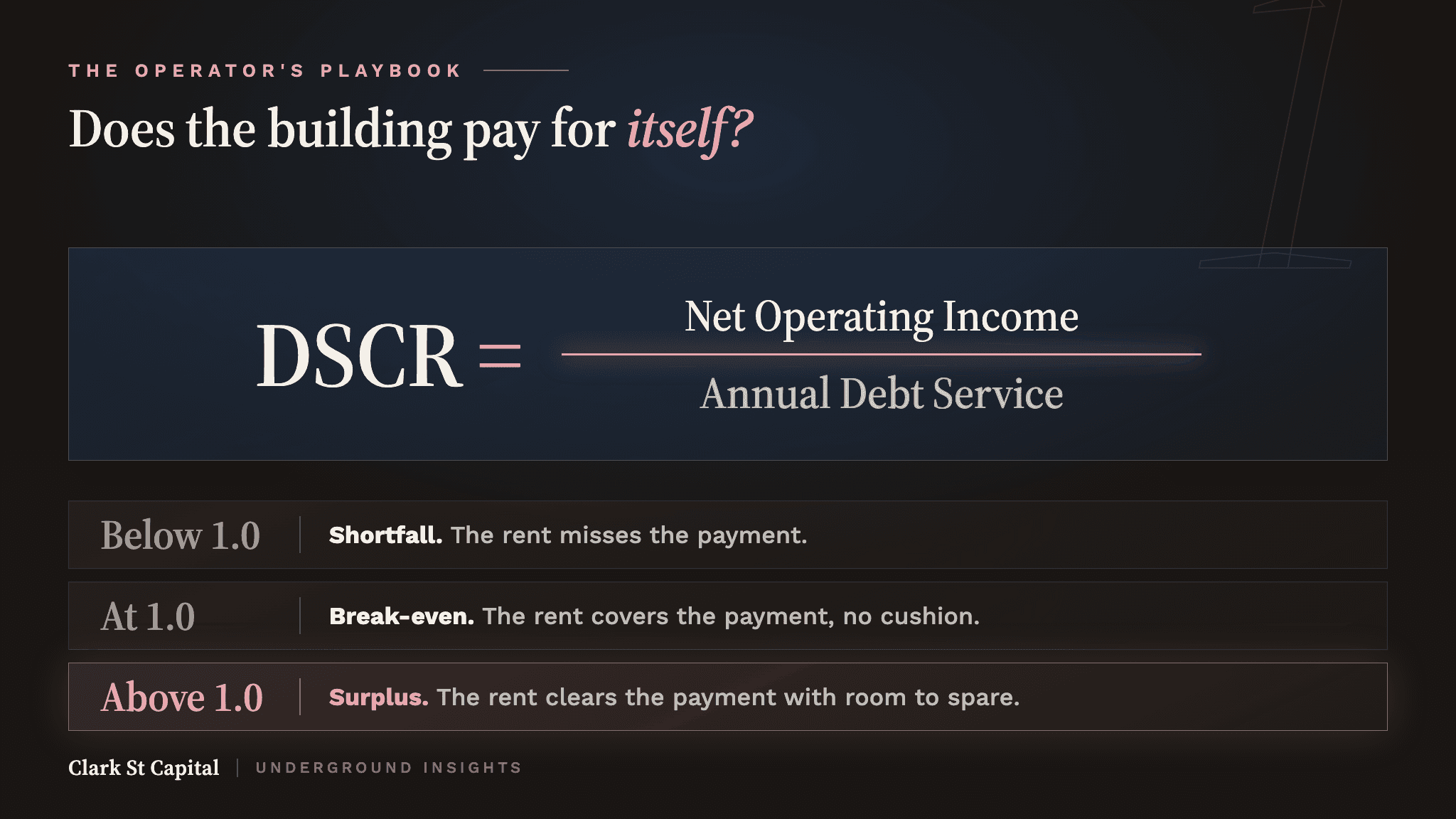
A DSCR loan qualifies your rental on the rent it produces, not your tax returns. Here is how the ratio works and where it fits after a flip.

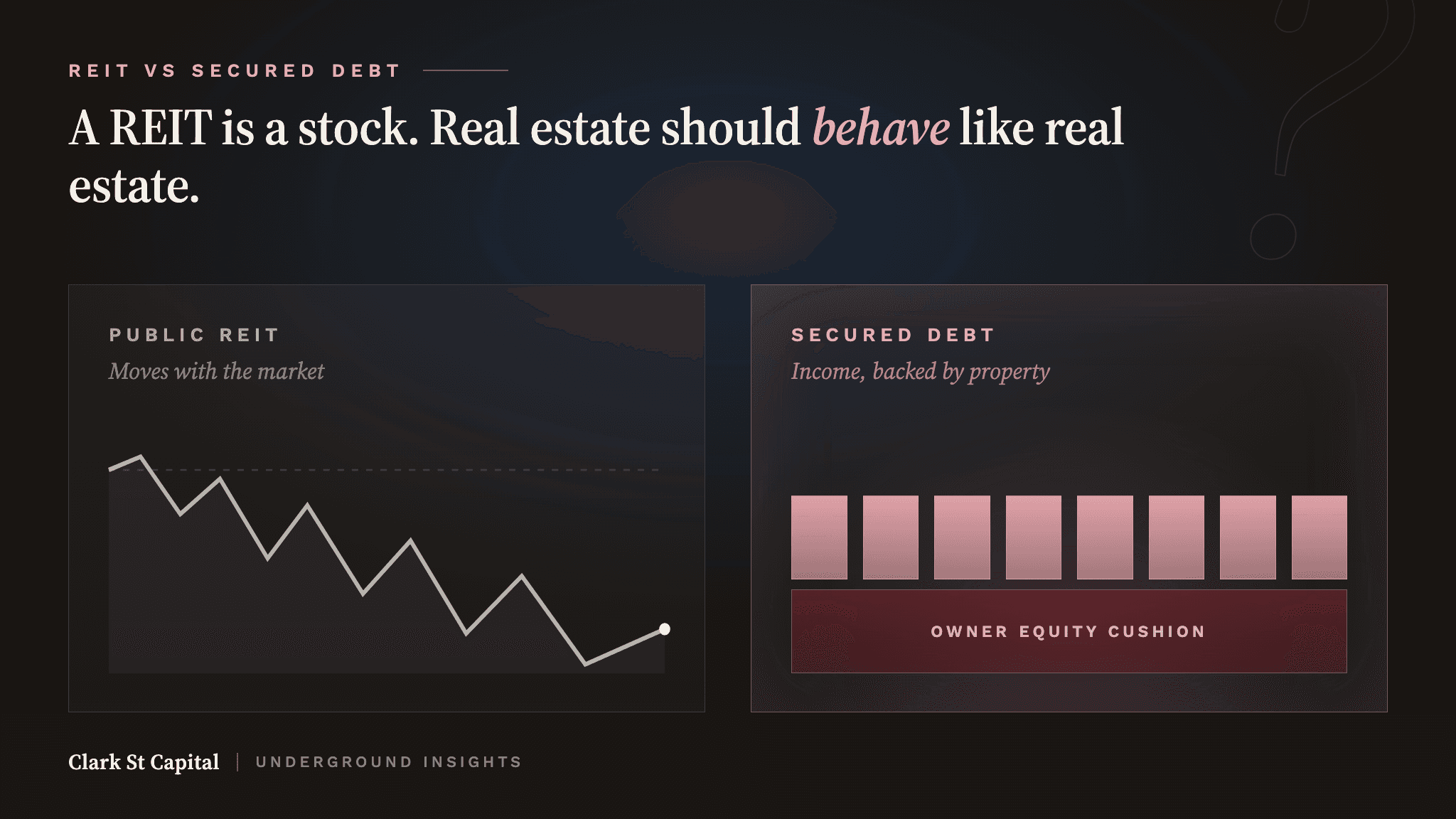
You bought a REIT for real estate exposure and it fell with your stocks. Here is what you were actually buying, and the alternative that behaves like real estate.

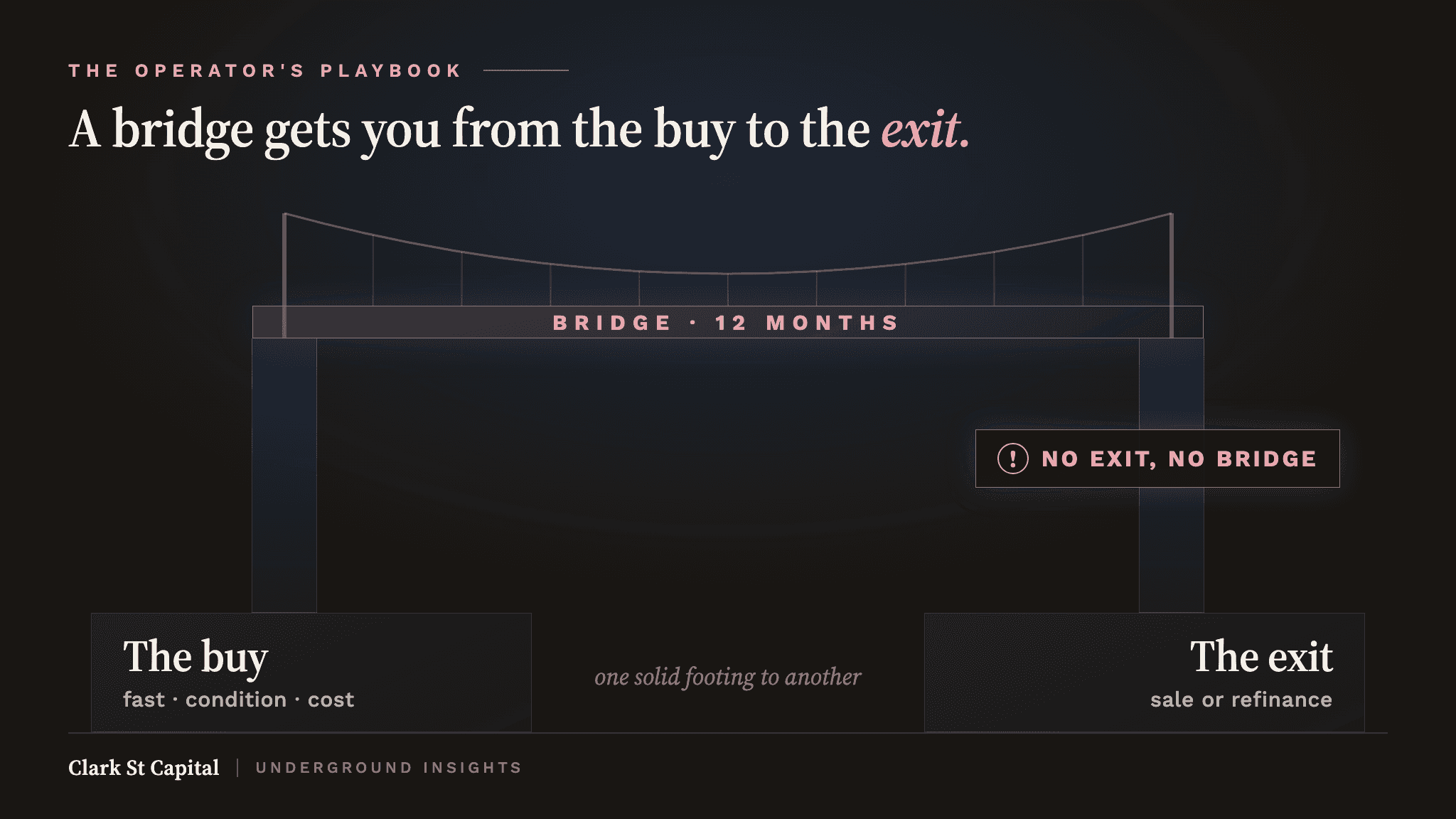
A BRRRR runs on two different loans, not one. Here is the full capital path: a bridge to buy and rehab, then a DSCR refinance to pull your money back out.

Private credit used to be a word for Blackstone and pension funds. Here is what it actually means, why it grew, and how to spot a trustworthy version.

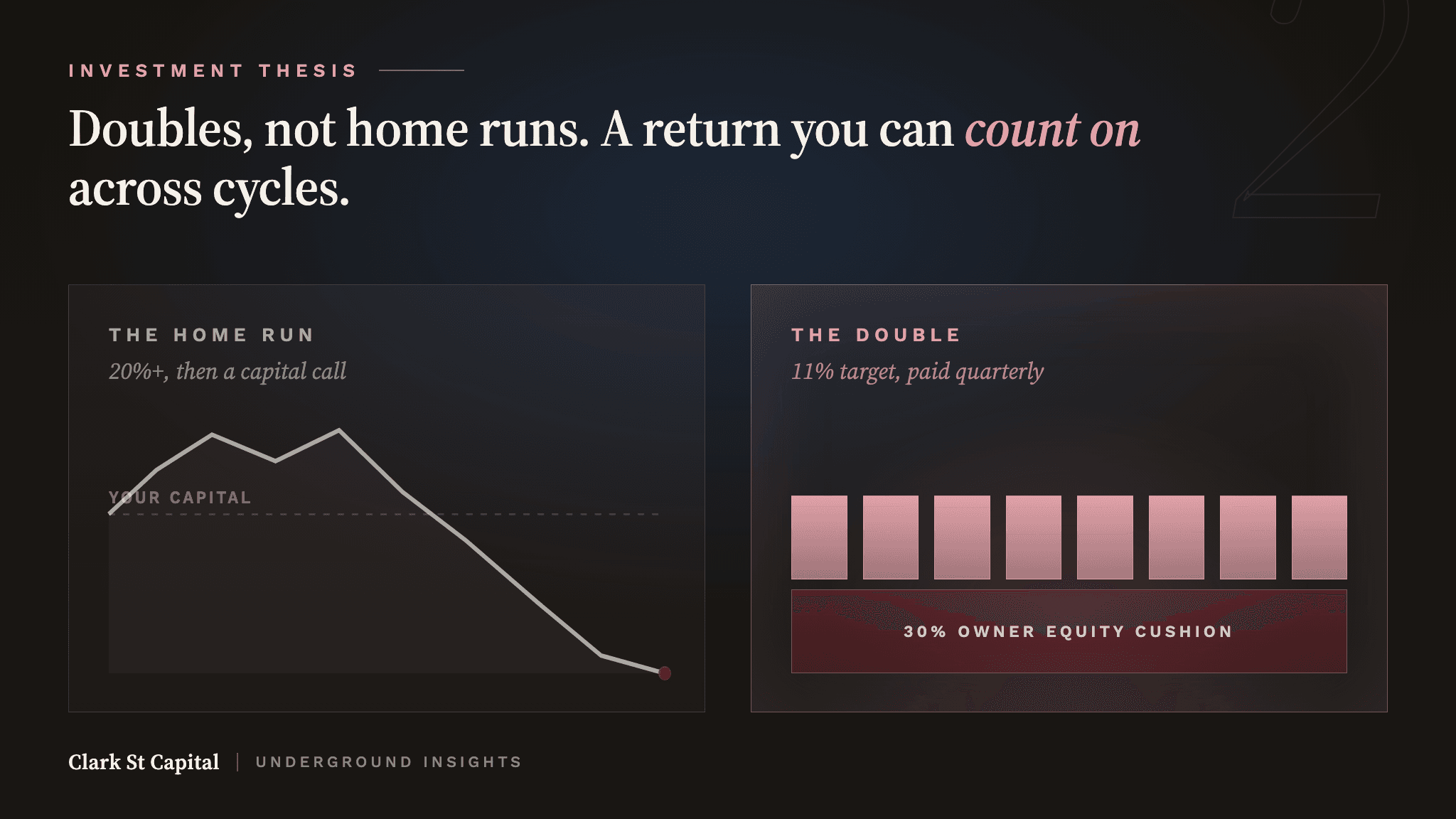
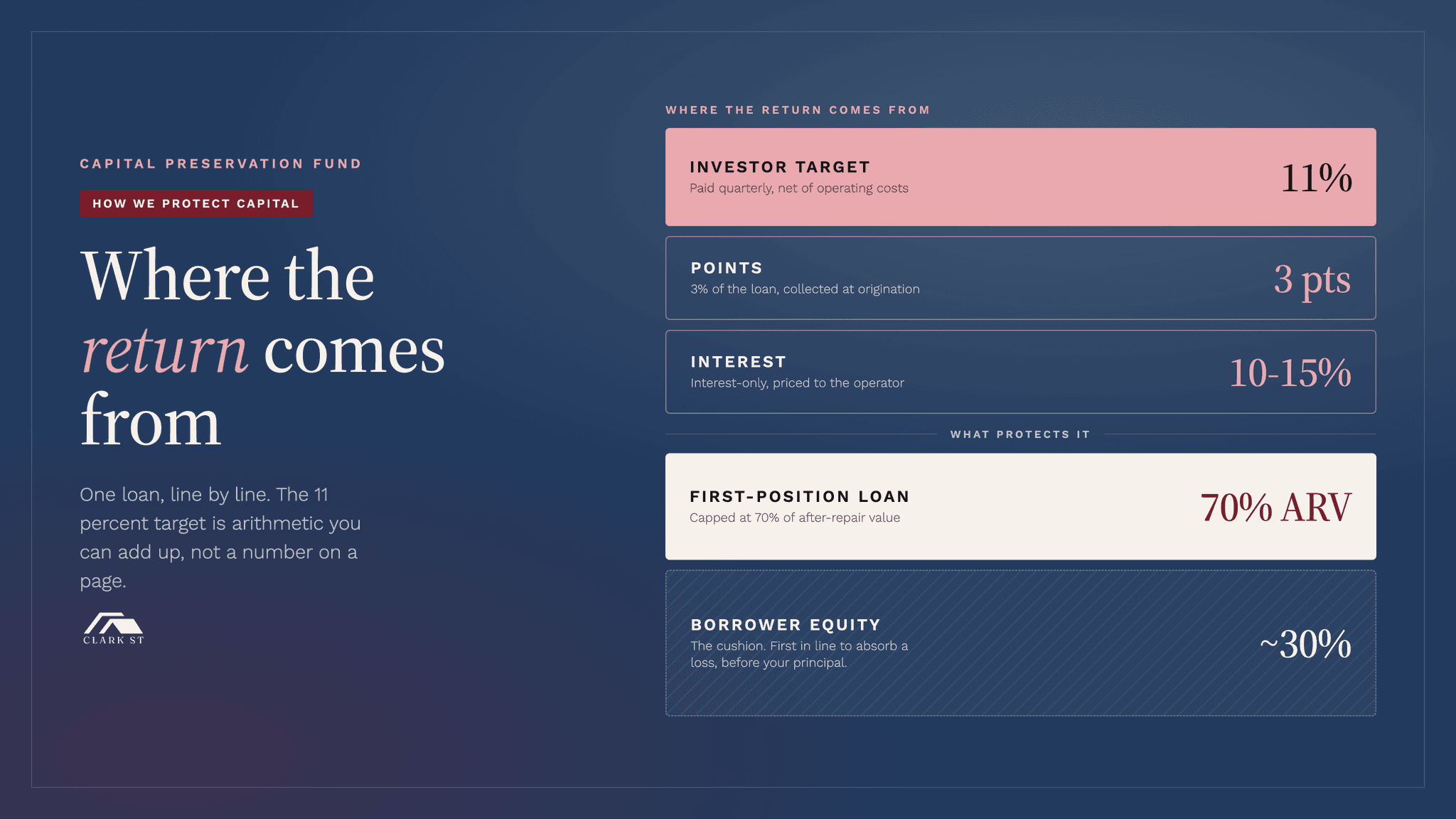
A target return you can't trace is just a number on a page. Here's the arithmetic under a real estate debt strategy, line by line.

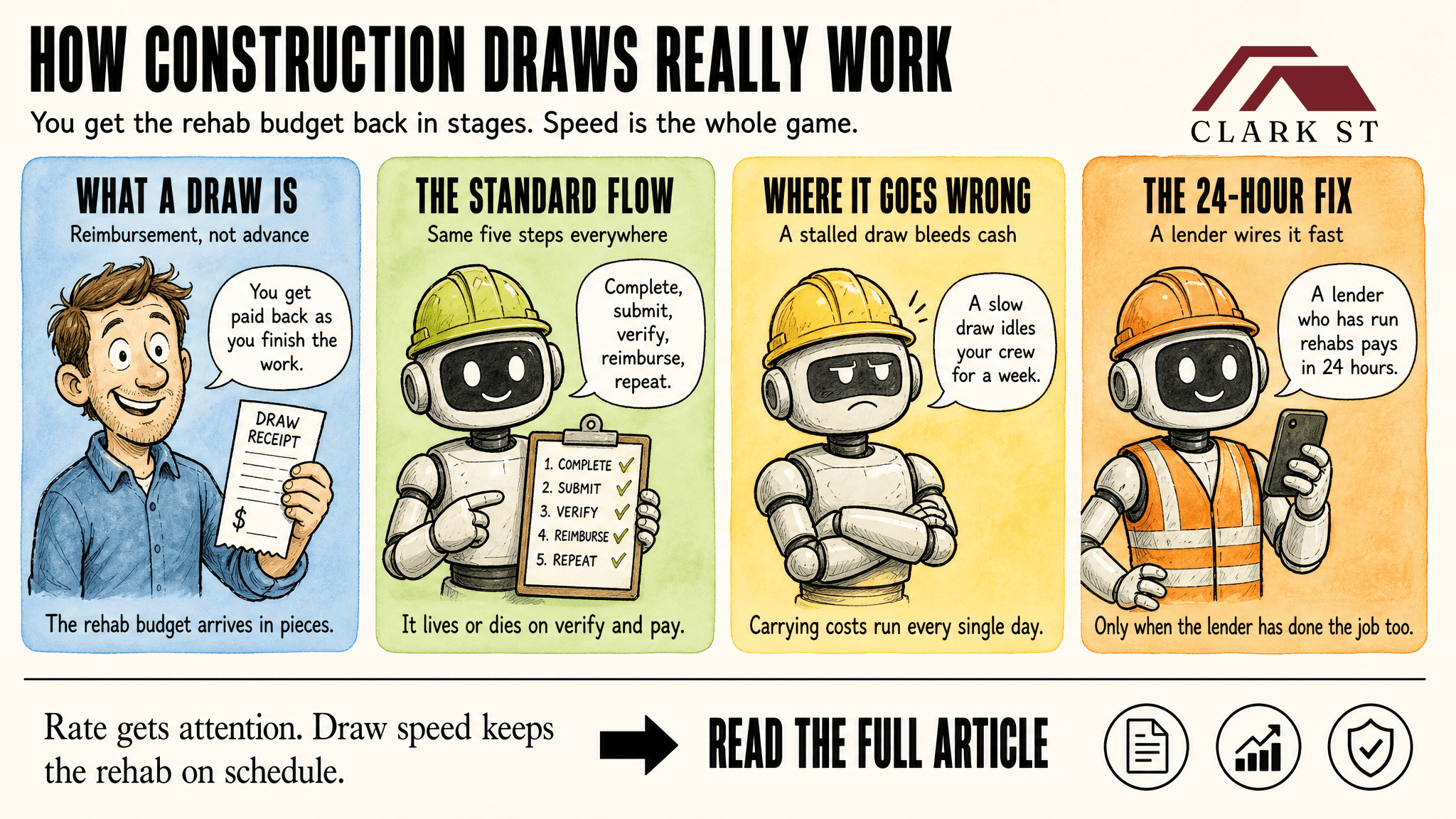
How a construction draw actually works on a flip, what a slow draw costs you in real dollars and why a 24-hour turn only happens when the lender has run rehabs.

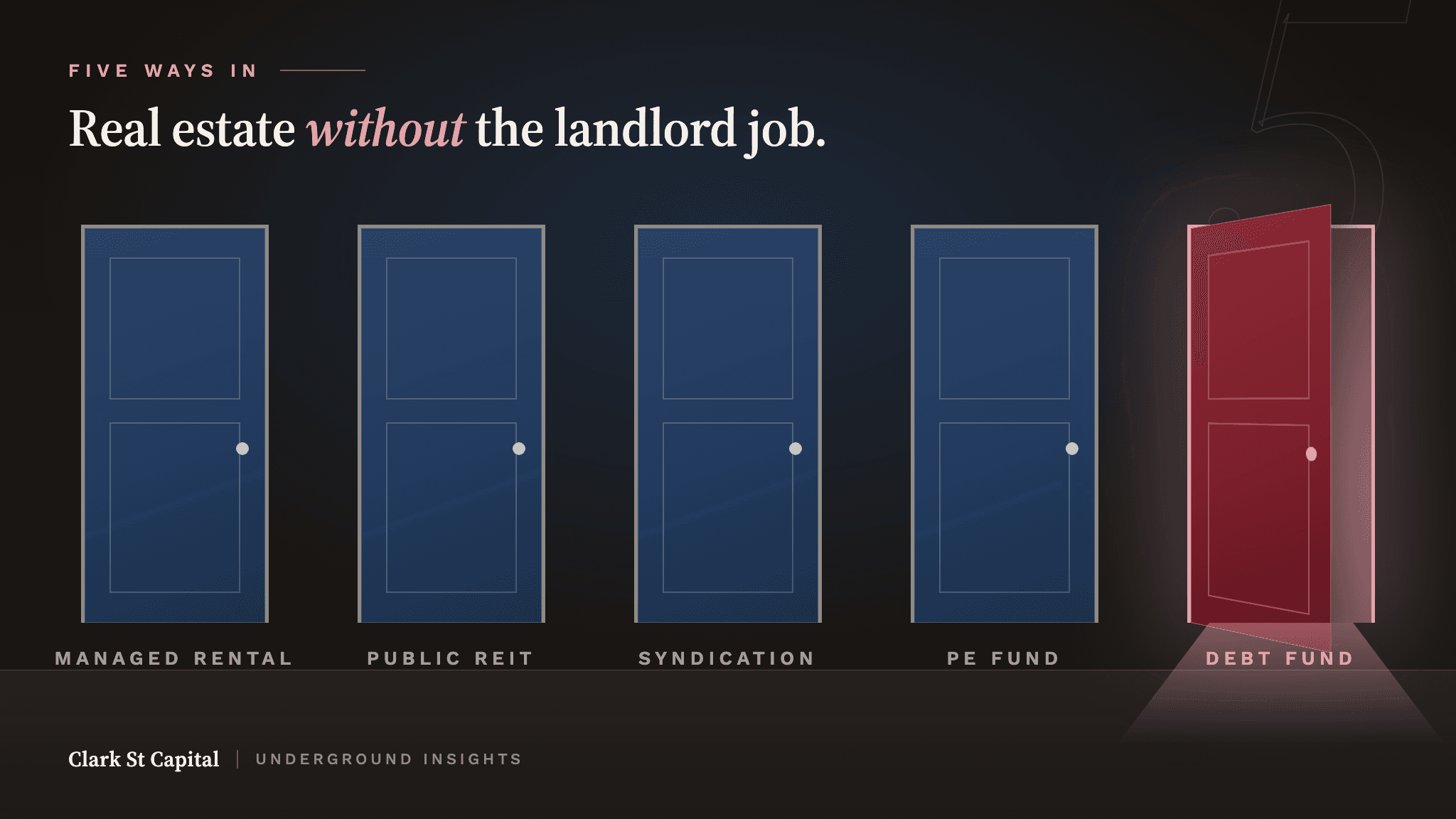
Being a landlord is one way into real estate, not the only one. Here are five hands-off paths and the honest way to tell which is actually passive.

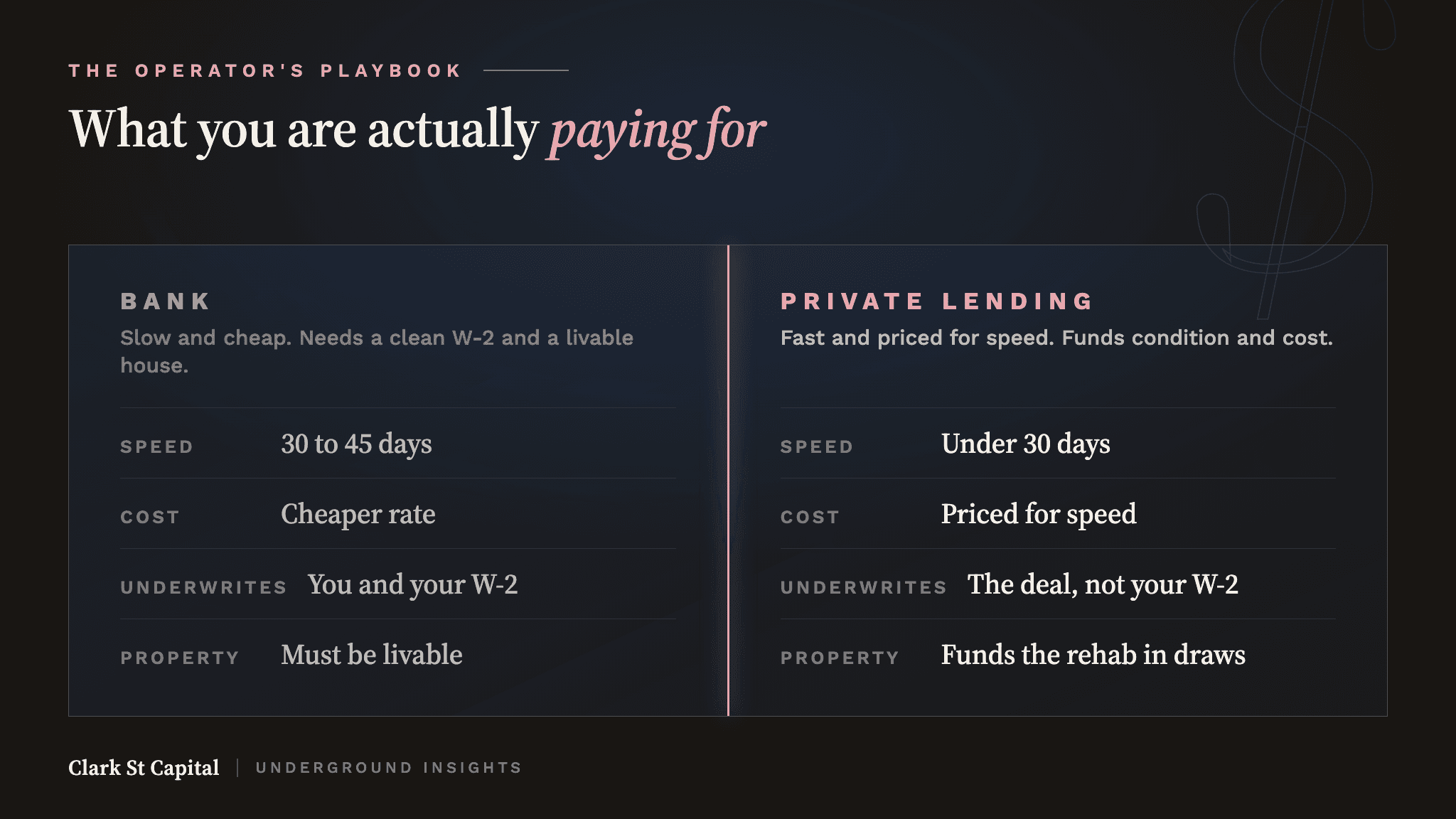
The label on your flip loan tells you almost nothing. Four measurable things do. Here is how to judge any lender before you sign.

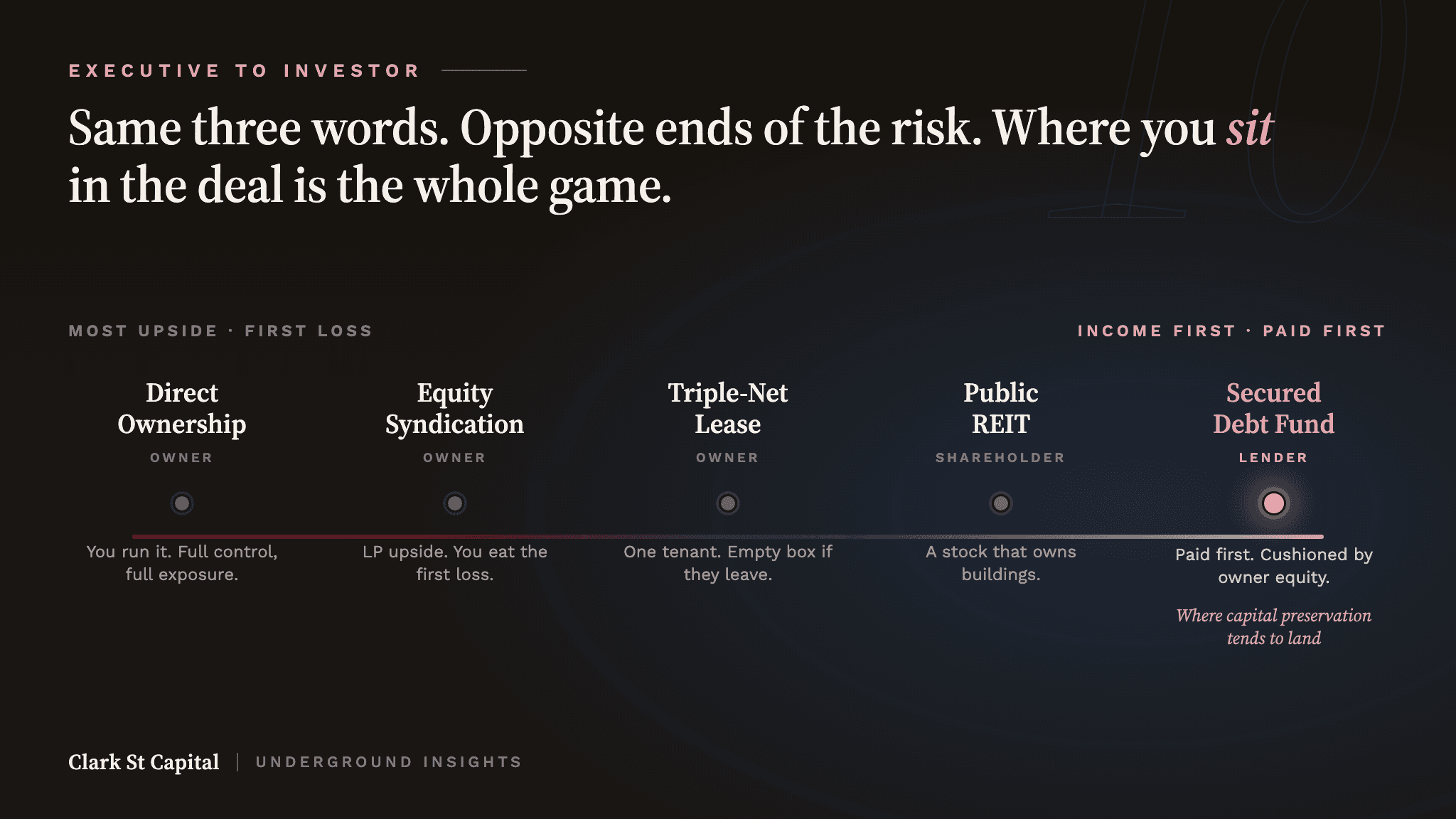
Both get sold as investing in real estate. They sit on opposite sides of the same deal. Here is how to tell which seat actually fits you.

Fix and flip loans in Connecticut come in five flavors, from your own cash to a local operator-lender. Here is what each really costs and how to finance your deal.

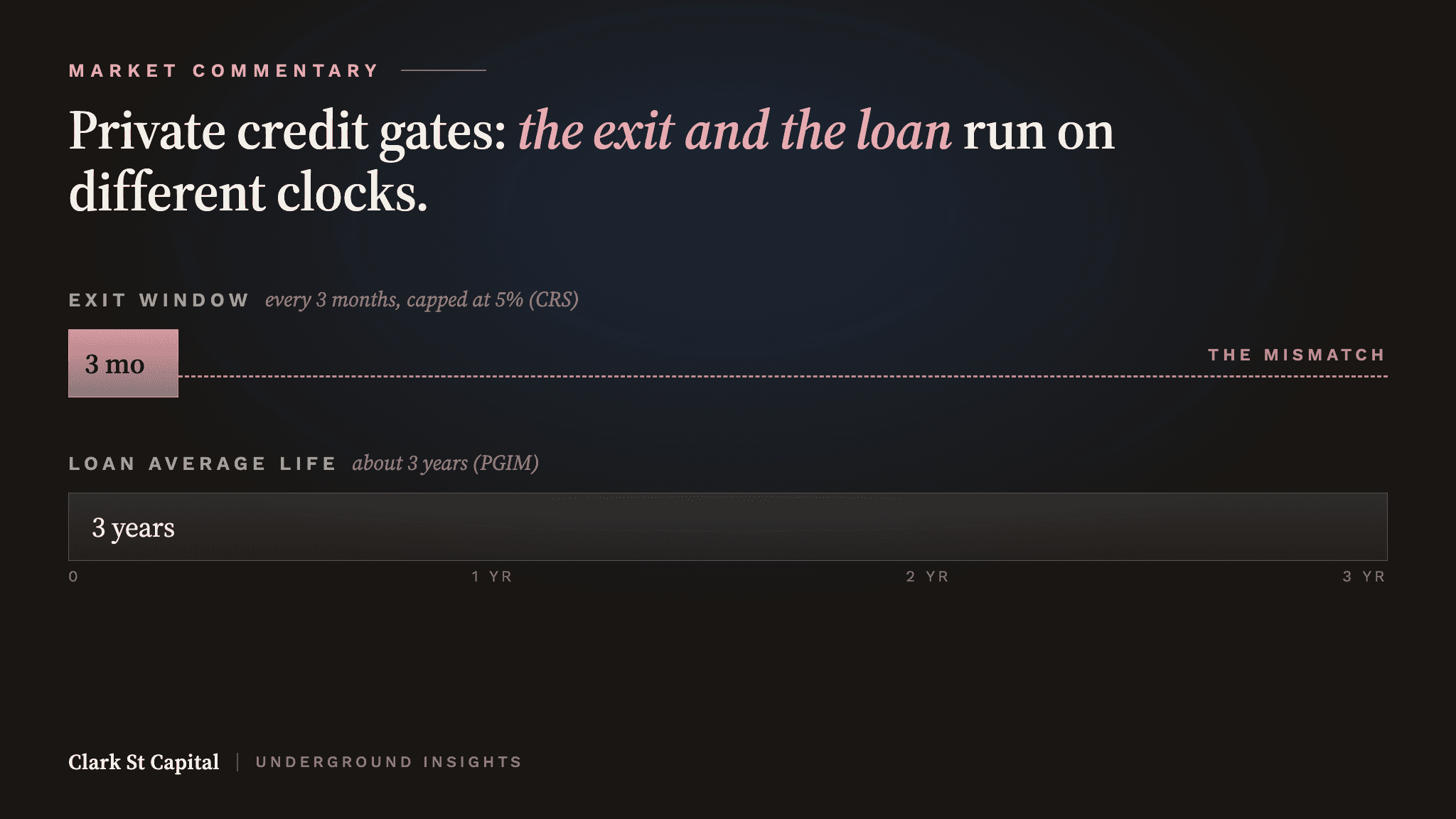
The commercial real estate maturity wall is a problem of duration. A 12-month flip loan removes the duration, so there is no cliff to hit.

A real estate debt fund lends money secured by property instead of owning it. Here is how it works and why both sides of the table win.

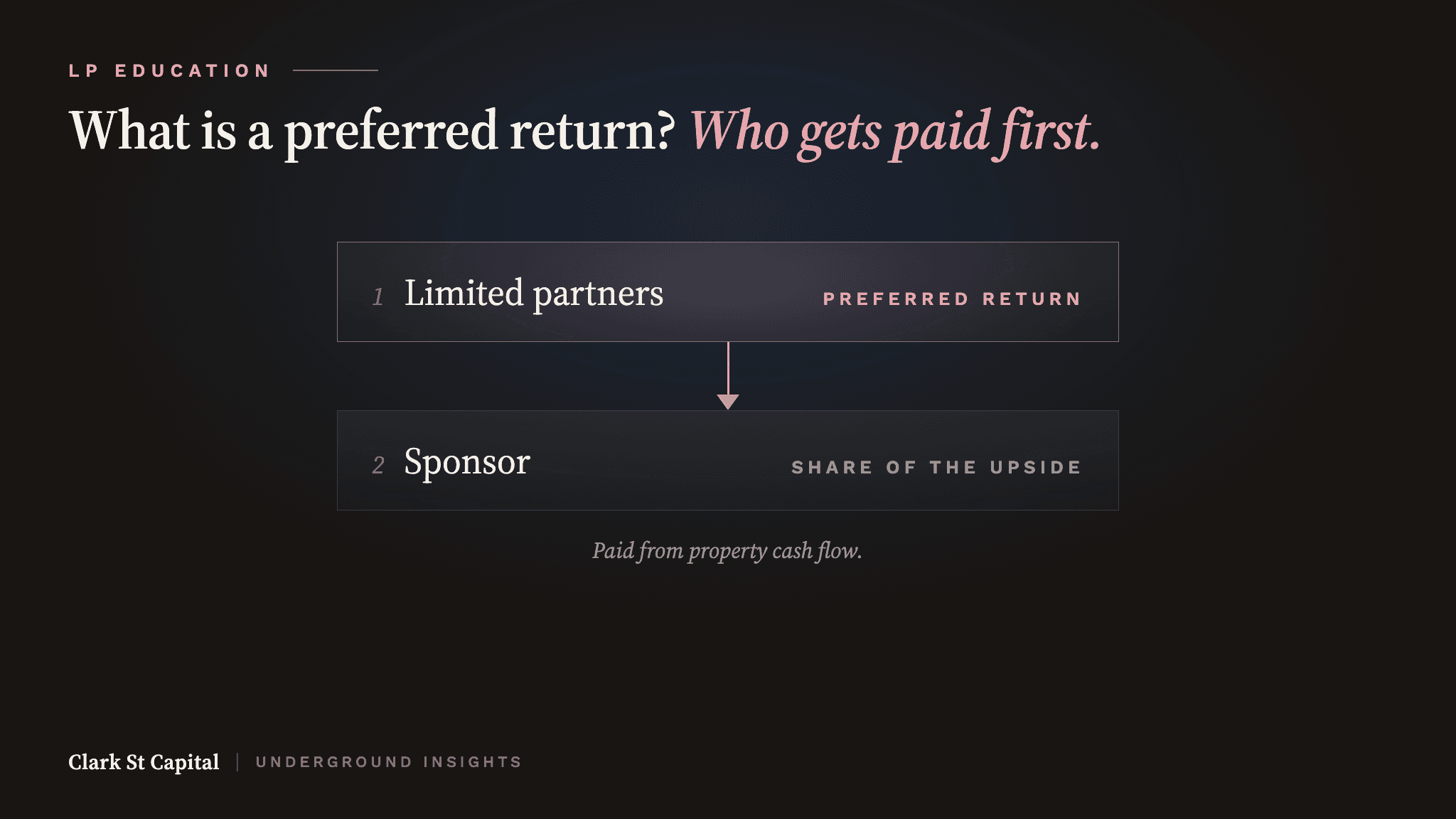
Bad-boy carveouts flip non-recourse debt to full personal recourse. Here's what every LP should ask before wiring.
The newsletter
Subscribers get every new note, plus the deal memos and market analysis that don't make the public blog.
Join accredited investors tracking Clark St's debt fund and Northeast multifamily underwriting.
By submitting, you agree to our Terms and Privacy Policy.
No spam. Unsubscribe any time.
We use cookies to measure site traffic. Accept or decline.